
What Components Make Up a Steering Rack?
- Rack and pinion: Core transmission components, determining precision and performance
- Housing and cover: Structural support and sealing, affecting durability
- Hydraulic system (for HPS): Cylinder, pipes, seals, and valves
- Electric system (for EPS): Motor, sensors, ECU, transmission unit
- Bearings, bushings, and seals: Reduce friction and ensure longevity
- Rubber boots: Protect from dust and water
- Fasteners and connectors: Ensure assembly stability
- Sensors and wiring: Critical for modern steering systems
How Can You Evaluate the Quality of Steering Rack Components?
Material & Processing
- High-strength steel and proper heat treatment
- Surface hardening (e.g., nitriding)
Precision & Tolerance
- Gear surface roughness
- Backlash and alignment accuracy
Sealing & Durability
- Oil resistance and temperature resistance
- Anti-aging performance
Functional Components
- Valve response (hydraulic systems)
- Motor and ECU reliability (EPS)
Testing & Certification
- Durability testing
- Leakage testing
- ISO/TS certification
Traceability
- Batch tracking
- Supplier reliability
How Does Component Quality Affect Steering Rack Price?
- Higher-grade materials increase raw material cost
- Precision machining raises manufacturing cost
- Testing and quality control add to total cost
- Premium components (bearings, sensors, motors) are more expensive
- Certifications and compliance increase overall pricing
- Longer warranty adds hidden cost
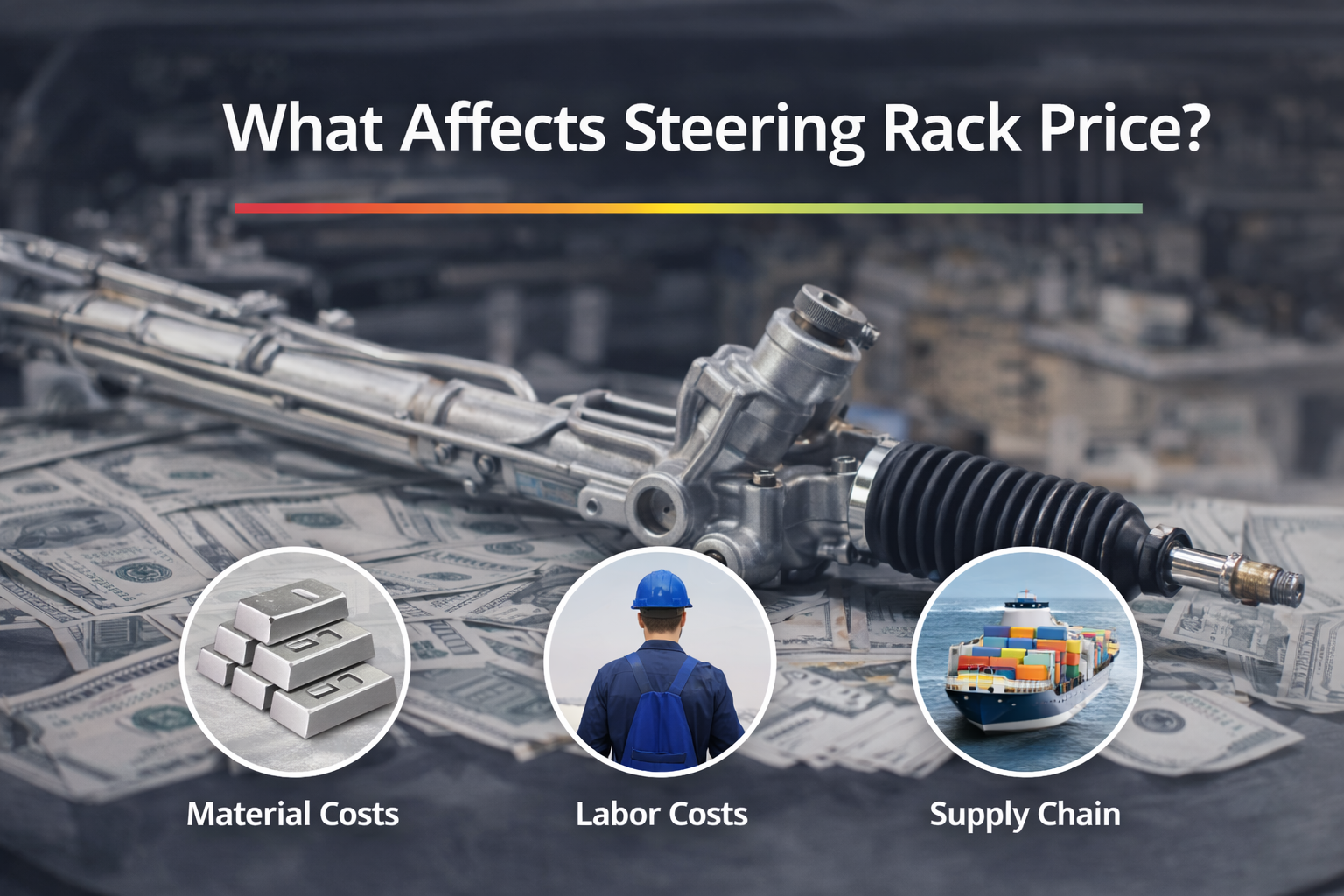
What Affects the Price of a New Steering Rack?
- OEM vs aftermarket
- Vehicle type and system complexity
- Included components (sensor, wiring, etc.)
- Manufacturing materials and process
- Distribution channel (OEM, dealer, online)
- Lead time and production scale
- Import duties and logistics
What Affects the Price of a Remanufactured Steering Rack?
- Core collection and inspection cost
- Reusable component ratio
- Remanufacturing standard (OEM-level or basic repair)
- Testing requirements
- Replacement parts quality
- Warranty policy
- Market demand and positioning
- Compliance requirements
How Should You Evaluate a Steering Rack Supplier?
- Industry experience and certifications
- Quality control and testing capability
- Supply chain stability
- Pricing transparency
- Warranty and after-sales service
- Customization capability
- Compliance with target market regulations
- Factory audit or third-party inspection
- Trial orders before bulk purchase
What Should You Consider When Importing from China?
- Supplier qualifications and export experience
- Testing reports and product validation
- Traceability of key components
- Packaging and logistics reliability
- Contract terms and warranty clarity
- Import regulations in your country
- Total landed cost (not just product price)
- Communication efficiency
- Risk control (small batch testing first)
Where Should You Source Steering Racks in China?
Why Is Guangzhou a Key Hub for Steering Rack Sourcing?
- Complete industrial chain (remanufacturing + parts + testing)
- Strong cost advantage due to supply density
- Experienced workforce and mature processes
- Efficient export logistics and port access
- Availability of third-party inspection and certification services
👉 So once you decide to source from Guangzhou, the next question becomes:
👉 Which type of supplier should you actually work with?
What Makes a Reliable Remanufacturing Factory?
- In-house remanufacturing process (not simple repair)
- Full functional testing before shipment
- Stable and traceable parts supply
- Clear quality control system
- Ability to support customization
- Export experience and compliance knowledge
What Does a Qualified Remanufacturing Partner Look Like in Practice?
For example, a reliable factory should be able to provide:
- Complete remanufacturing workflow with testing benches
- Strict quality inspection from incoming parts to final delivery
- Technical support for OEM matching and customization
- Clear warranty policy and responsive after-sales service
- Stable export experience for global B2B clients