
Rack and pinion and steering box systems function the same: converting steering-wheel input into movement at the front wheels. But they use different mechanical layouts. Rack and pinion uses a pinion gear and sliding rack, while a steering box uses reduction gearing and external linkage. The difference affects packaging, steering feel, load capacity, maintenance, and vehicle application.
What Is a Rack and Pinion Steering System?
Rack and pinion steering is a mechanical system that converts the circular motion of a steering wheel into the side-to-side linear motion needed to turn a vehicle’s wheels. When the driver turns the wheel, the pinion rotates against teeth on a straight rack bar. The rack moves left or right, and tie rods transmit that movement to the steering knuckles.
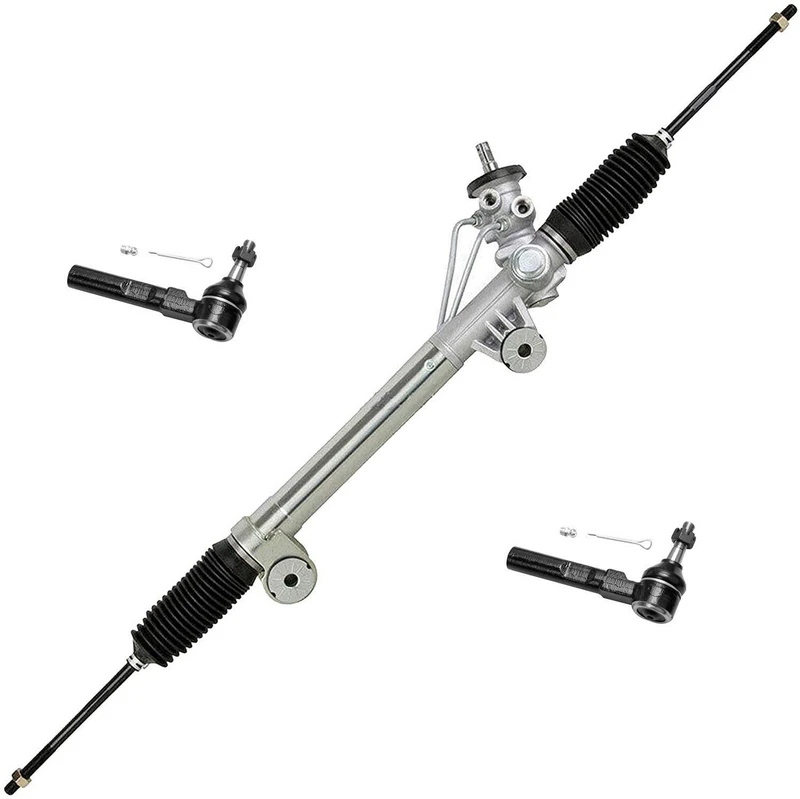
A 2024 SAE technical paper identifies steering ratio, rack force, free pinion torque, gear geometry, strength, and packaging clearance as key design factors.
What Is a Steering Box?
A steering box, or steering gearbox, converts steering-wheel rotation through a geared mechanism before sending movement to external steering linkage.
What It Does?
- Transfers motion: It connects your steering shaft to the vehicle’s linkage system.
- Multiplies force: It uses gear reduction to make turning heavy vehicles or large trucks much easier for the driver.
- Changes angles: It shifts the rotational force from the steering column sideways to push and pull the steering linkage.
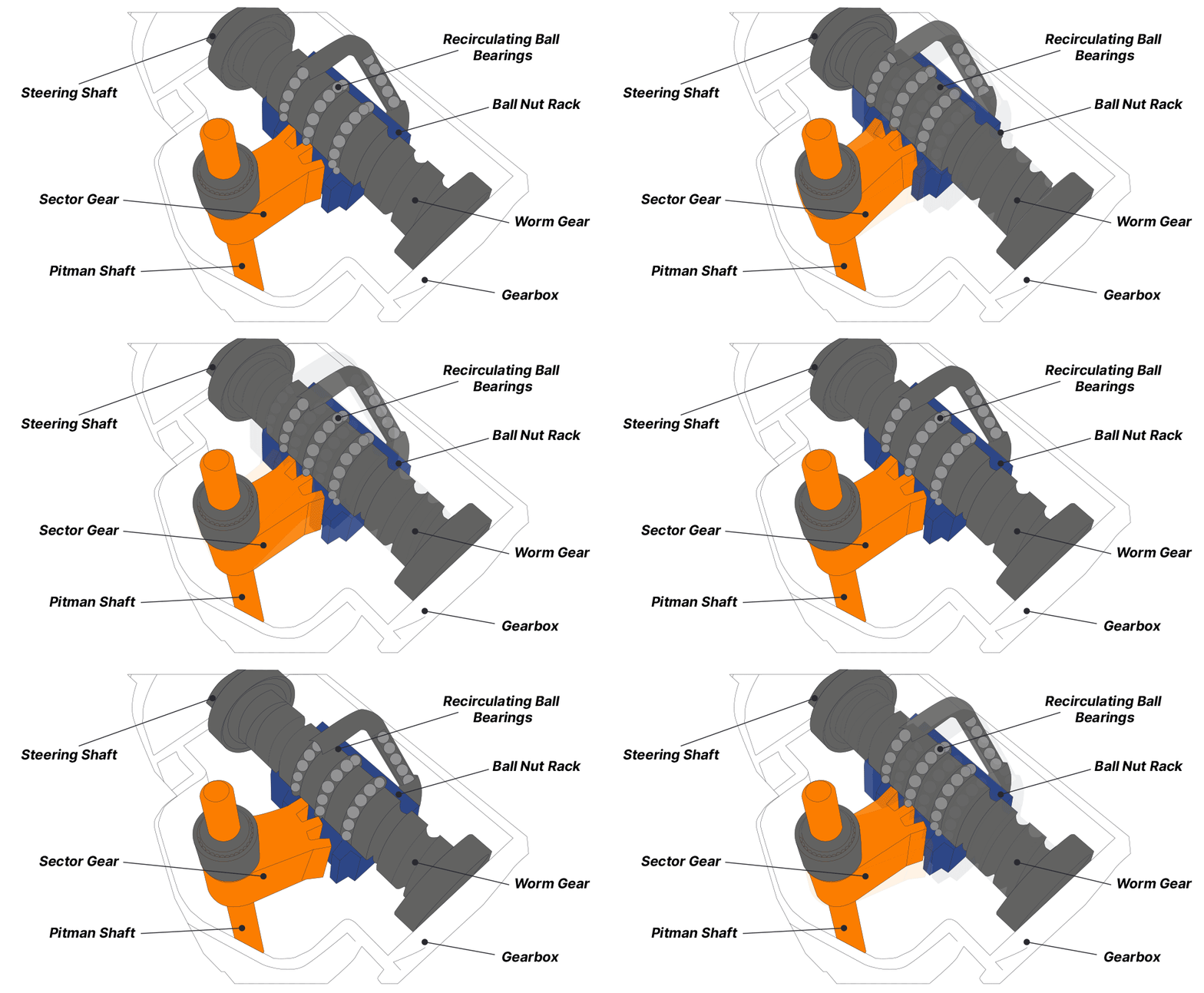
This layout provides mechanical reduction and suits applications where the steering gear must handle substantial loads for many vehicle design requirements.
How Do Rack and Pinion and Steering Box Systems Work Differently?
The main difference is how steering-wheel rotation becomes wheel movement.
| Feature | Rack and Pinion | Steering Box |
|---|---|---|
| Main mechanism | Pinion drives a straight rack | Worm or recirculating-ball gear drives output shaft |
| Wheel connection | Tie rods connect to rack | Pitman arm and additional linkage |
| Linkage parts | Fewer | Usually more |
| Packaging | Compact | Larger assembly |
| Steering response | Typically direct | More mechanical reduction |
| Common use | Passenger cars and crossovers | Trucks, utility vehicles, older large vehicles |
| Power assist | Manual, hydraulic, or electric | Hydraulic or electric |
Rack and pinion converts pinion rotation directly into linear rack travel. A steering box first rotates an output shaft, then external linkage transfers that movement to the wheels.
Why Does Rack and Pinion Usually Feel More Direct?
Rack and pinion generally provides a more immediate mechanical connection between steering input and wheel movement.
- Fewer linkage joints: Less intermediate hardware can reduce free play.
- Direct linear movement: Rack travel begins as the pinion rotates.
- Compact geometry: The assembly can sit close to the front suspension.
- Controlled gear mesh: Tooth geometry and preload support precise response.
An SAE study reported favorable stiffness characteristics for rack-and-pinion steering compared with recirculating-ball systems. Steering feel, however, also depends on gear ratio, friction, power-assist calibration, suspension geometry, and tires.
Rack and pinion is therefore usually preferred when compact packaging and direct response are priorities.
Why Are Steering Boxes Still Used?
Steering boxes remain useful where load capacity, reduction, durability, and chassis layout favor a gearbox-and-linkage arrangement.
- High steering loads: Larger vehicles may need greater steering force.
- Mechanical leverage: Gear reduction can reduce driver effort.
- Chassis compatibility: Body-on-frame platforms can suit external linkage.
- Heavy-duty use: Steering boxes can support demanding truck applications.
In January 2025, ZF presented a 48-volt electric recirculating-ball steering gear for hydraulic replacement applications.
Which System Has More Wear Points?
A steering box usually has more external linkage points, while rack and pinion concentrates more of the mechanism into one assembly.
Common rack wear areas include the rack shaft, pinion, bushings, bearings, seals, tie rods, and boots. Hydraulic racks add pressure seals and fluid passages; EPS racks add motors, sensors, wiring, and electronic controls.
A steering box can wear at the internal gears, pitman shaft, seals, pitman arm, idler arm, drag link, and tie-rod joints.
For component details, see GL-Laida’s “Steering Rack Parts Explained: Function, Failure and Fixes.” The guide explains how the rack shaft, pinion gear, tie rods, seals, bushings, bearings, and bellows boots work together inside a steering rack assembly.
How Can You Tell Which Steering System a Vehicle Uses?
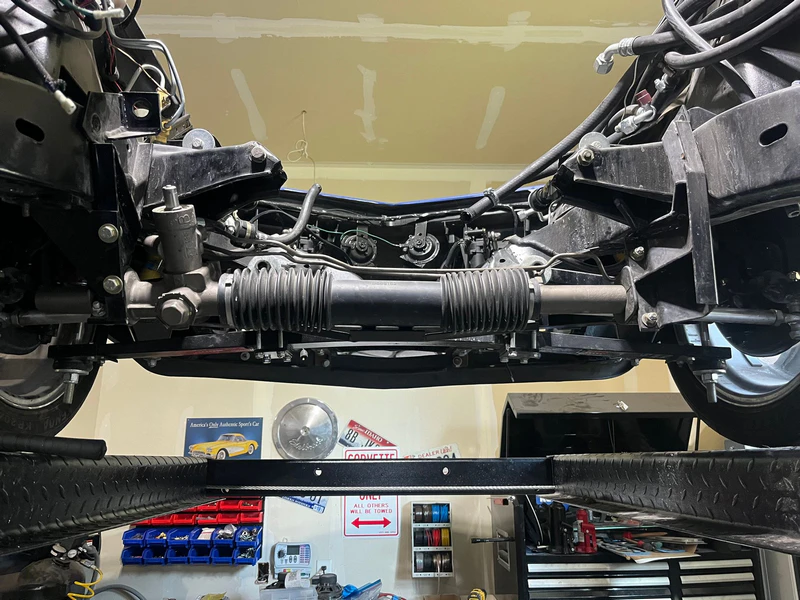
The system can usually be identified through visual inspection and vehicle data.
- Long transverse rack housing: Usually indicates rack and pinion.
- Gearbox with a pitman arm: Usually indicates a steering box.
- Hydraulic hoses: Suggest hydraulic power assistance.
- Electric motor and connectors: May indicate EPS.
- VIN or OEM number: Confirms the exact application through parts data.
Do not order a replacement from appearance alone. Production year, LHD or RHD configuration, drivetrain, OEM number, connectors, and steering technology can change fitment.
Which Is Better: Rack and Pinion or Steering Box?
A rack and pinion system uses a circular gear to move a straight toothed bar directly, while a steering box uses a gearbox and multiple linkage arms to turn the wheels.Neither system is universally better. The best choice is the steering design engineered for the vehicle.
Rack and pinion is generally better suited to modern passenger cars and crossovers because it is compact, comparatively light, and direct. Steering boxes remain appropriate where greater reduction, robust linkage, or heavy-duty load capability is required.
S&P Global Mobility reported in May 2025 that the average age of U.S. light vehicles reached 12.8 years and the vehicle population reached about 289 million. Older and newer steering technologies therefore remain in service together.
For replacement purchasing, verify the OEM number, vehicle model, year, steering type, LHD/RHD specification, and physical configuration. The best replacement is the system that correctly matches the vehicle.
Frequently Asked Questions
Is rack and pinion the same as a steering box?
No. Rack and pinion converts pinion rotation directly into lateral rack movement. A steering box uses reduction gearing and an output arm connected to external linkage.
Is rack and pinion better for passenger cars?
Yes, rack and pinion steering is generally better and more efficient for modern passenger cars than older steering box systems.
Is it safe to drive with a bad steering rack ?
Driving with a bad steering rack is dangerous and strongly discouraged, though minor fluid leaks may allow for short, cautious trips over a few days while monitoring fluid levels.
Can a steering box use electric power steering?
Yes, a vehicle with a traditional steering box can use electric power steering by installing a column-mounted electric power assist unit higher up the steering shaft.
Can I replace a steering box with rack and pinion?
Not as a routine parts swap. The systems use different mounting, linkage, geometry, and sometimes electronic or hydraulic architecture. Normal repairs should use the correctly matched original steering design.