
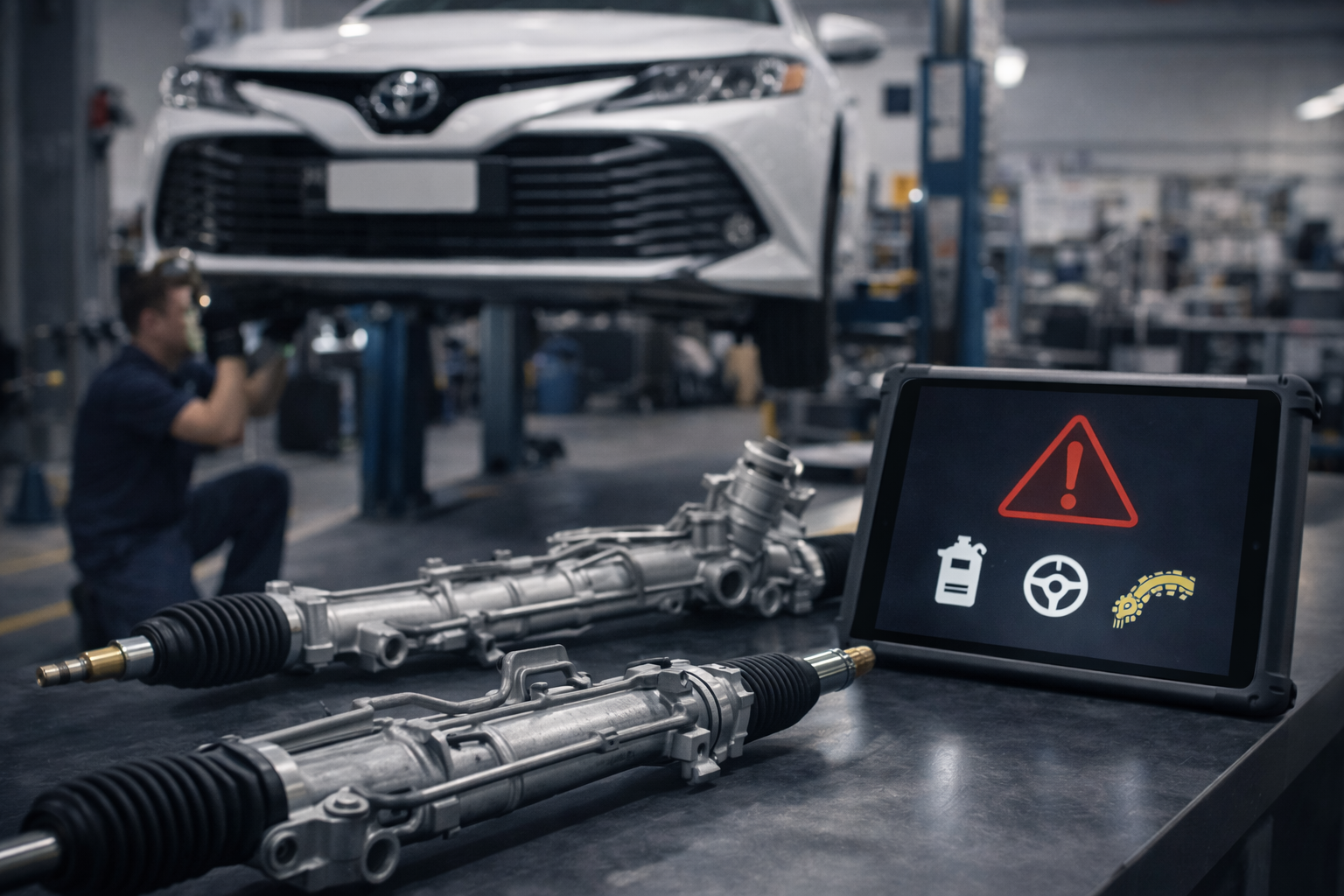
Toyota Camry Steering Rack Problems (Common Issues & Solutions)
Most of you probably know the Toyota Camry, right? As one of the most popular midsize sedans in the world, it’s known for being reliable, easy to drive, and comfortable. Whether it’s your daily family ride or doubling as a business car now and then, it handles pretty smoothly.
But even for a star model as tough as the Toyota, after years on the road, the steering system—especially the steering rack—can start to act up now and then.
For the guys at the auto repair shops, folks selling car parts, or anyone managing a fleet, knowing what these common problems look like, why they happen, and how to fix them isn’t just about helping car owners get back on the road. It also makes buying parts and managing inventory way easier and helps you avoid unnecessary headaches.
So today, let’s have a good chat about the most common Toyota Camry steering rack problems. We’ll walk you through how to spot them and how to solve them—all straight-up, practical info, no fancy jargon here.
1. Types of Steering Systems in Toyota Camry
Before discussing common problems, it’s important to understand the two main types of steering systems used in Toyota Camry models:
Hydraulic Power Steering (HPS):
This system is mainly found in Camry models from the early 2000s to the early 2010s (such as XV30 and XV40). It uses a pump driven by the engine to generate hydraulic pressure, which helps the driver turn the wheel more easily.
Electric Power Steering (EPS):
This system is used in newer Camry models from the mid-2010s to today (such as XV50, XV70, and later). It relies on an electric motor to provide steering assistance, offering a simpler structure and improved energy efficiency.
Since different model years use different steering systems, the common issues and repair solutions can vary accordingly.
2. Common Toyota Camry Steering Rack Problems & Symptoms
2.1. Steering Noise (Noise When Turning)
This is one of the most common complaints from Camry owners. The specific sound you hear depends on where the problem is coming from.
Hydraulic Power Steering Models:
What you’ll notice: A clear “squeaking” or high-pitched whining sound when turning the wheel while stopped or moving slowly.
Why it happens: This usually points to the power steering pump—things like internal pump wear, a loose belt, or low/old fluid. If the noise seems to be coming from inside the cabin, it could be worn gears inside the steering rack or the dust boot rubbing against something.
Electric Power Steering Models:
What you’ll notice: A “clicking” or “rattling” metal-on-metal sound when turning.
Why it happens: This typically means mechanical parts inside the steering rack are worn out—like too much gap between the rack and pinion gears, or loose tie rod ends. Unlike hydraulic systems, EPS units don’t make that whining pump noise.
2.2. Stiff or Heavy Steering
The steering wheel feels unusually hard to turn, especially at low speeds or when parking. It really takes the joy out of driving.
Hydraulic Power Steering Models:
Why it happens: Most often, it’s because the power steering pump isn’t working right (not enough pressure) or there’s a fluid leak leaving the system dry. Check if the pump belt is slipping, if the fluid reservoir is at the right level, and if any hoses are leaking.
Electric Power Steering Models:
Why it happens: Heavy steering on EPS models usually ties back to electronic issues, including: a faulty steering torque sensor, problems with the EPS control unit, motor failure, or bad electrical connections. Sometimes, really off wheel alignment (like too much toe-in) can also make steering heavier.
2.3. Vehicle Pulls to One Side
You have to constantly tug at the steering wheel to keep the car going straight down the road.
Possible reasons:
Wheel alignment off (this is the most common culprit).
Tire pressure differences between left and right, or uneven tire wear.
Internal steering rack trouble: If the alignment checks out but the car still pulls, the issue could be an unbalanced valve inside the rack (on hydraulic models) or uneven assist from the motor (on electric models), causing different power assist levels left vs. right.
A bent tie rod or worn tie rod ends.
2.4. Excessive Play in the Steering Wheel
When you turn the wheel, there’s a “dead zone” at the beginning—the wheel moves, but the car doesn’t respond. You have to turn it a bit more before the wheels actually start turning.
What’s behind it:
Too much gap between the rack and pinion gears inside the steering unit (happens over time with normal wear).
Worn or loose outer or inner tie rod ends.
Loose steering rack mounting brackets or worn-out rubber bushings that connect the rack to the car.
Safety reminder: Too much free play messes with your steering precision and driving safety. On the highway especially, you’ll find yourself constantly making little corrections—and that’s a real safety risk.
2.5. Fluid Leaks — Hydraulic Models Only
If you spot stains on the ground where the car was parked (usually reddish or yellowish fluid), or if the power steering fluid level keeps dropping, you’ve got a leak somewhere in the system.
Where leaks usually happen:
Inside the dust boots at both ends of the steering rack (the seals inside have worn out, and fluid collects in the boots).
At the connections for the high-pressure or return hoses.
Around the power steering pump seal.
3. Diagnostic Approach: How to Quickly Identify Steering Problems
For mechanics and buyers, a fast and accurate diagnosis is essential for efficient service and correct parts selection.
Step 1: Listen and Locate the Noise
Start the engine and gently turn the steering wheel while the vehicle is stationary.
Pay attention to where the noise comes from:
From the engine bay → possibly the power steering pump or belt
From under the dashboard or near the wheels → likely the steering rack or tie rods
Step 2: Check the Power Steering Fluid (For Hydraulic Systems)
Inspect the fluid level and condition in the reservoir.
Low fluid level may indicate a leak
Dark, foamy, or burnt-smelling fluid suggests internal wear or that the fluid needs replacement
Step 3: Lift the Vehicle for Inspection
Raise the vehicle and perform a visual and physical check:
Inspect the steering rack boots for cracks or damage
Check for any fluid leakage (for hydraulic systems)
Hold the wheels and move them left and right to detect play in the tie rod ends or inside the steering rack
Step 4: Road Test
Drive the vehicle at different speeds and evaluate steering performance:
Is the steering effort consistent?
Does the vehicle pull to one side?
Are there any vibrations or unusual noises?
4. Solutions: When to Repair, When to Replace?
4.1. When you can repair it
Minor fluid leaks (hydraulic models):If it’s just a loose hose connection or slight seepage, you can try tightening the fitting or simply replacing the O‑ring/seal.
Worn external parts:Small components like tie rod ends, ball joints, or dust boots can be replaced individually if they’re worn or damaged—no need to replace the whole steering rack.
Minor electrical issues:If the EPS (electric power steering) has small problems, like a faulty sensor or loose wiring, a qualified mechanic can often diagnose and fix them.
4.2. When we recommend replacing the entire steering rack
Severe internal wear:If the rack and pinion inside are badly worn and can’t be fixed by adjusting screws, replacing the whole assembly is the better option.
Unfixable leaks (hydraulic models):If the internal oil seals are worn out and leaking, replacing just the seals is expensive and often doesn’t last long. It’s better to replace the whole unit.
Failed motor or control module:Key EPS parts like the electric motor and control unit are usually integrated. Repairing them separately is difficult and unreliable, so replacement is more practical.
Damaged or bent housing:If the steering rack housing is deformed due to an accident or heavy impact, it’s almost impossible to repair properly—replacement is the safe choice.
5. Why Choose a Remanufactured Steering Rack?
As a professional steering system supplier, we strongly recommend going with a high-quality remanufactured steering rack when a replacement is needed.
5.1.The Core Advantages of Remanufactured Steering Racks
5.1.1.Cost-Effective: Priced at about 40%-60% of a brand new OEM part. This helps your customers save on repair costs while leaving you with a healthy profit margin.
5.1.2.Performance That Matches New: Our remanufacturing process isn’t just simple “refurbishing.” Every single steering rack goes through:
Complete tear-down and cleaning: All sludge, rust, and old paint are stripped away.
Strict inspection and sorting: The housing must be crack-free and straight; the rack and pinion gears must show no wear or peeling.
All wear parts replaced: We install brand new oil seals, O-rings, dust boots, bearings, and more.
Assembly and testing: Each unit gets performance-tested under simulated real-world conditions to ensure no noise, no leaks, and proper steering torque.
5.1.3.Available Models: We currently have remanufactured steering racks ready to go for these OE numbers:
44250-33621
44250-06470
44200-33471
44250-06580(58)
If your customer’s Camry needs a rack matching one of these numbers, we’ve got you covered.
5.1.4.Eco-Friendly: Remanufacturing puts resources back to work and cuts down on metal waste polluting the environment—a win for sustainability and a perfect fit with global green trends.
6. Professional Advice for Workshops and Distributors
Ensure Accurate Vehicle Matching
Toyota Camry models vary by year and engine type, and differences may exist in steering rack connections and electronic systems.
Before purchasing, always verify the model year, VIN number, and the original part number to ensure correct fitment.
Pay Attention to Related Components
When replacing the steering rack, it is recommended to also check or replace related parts such as tie rod ends and dust boots.
At the same time, inspect the suspension system for any wear.
For hydraulic systems: flush the lines and replace the power steering fluid
For electric systems (EPS): steering angle sensor calibration may be required after installation
Choose a Reliable Supplier
Working with a professional manufacturer that offers stable remanufacturing quality, warranty support, and technical assistance is essential to reduce after-sales issues and improve customer satisfaction.
Partnering with an experienced factory like us helps you ensure consistent product performance and long-term reliability for your customers.
Conclusion
The steering system of the Toyota Camry has earned a strong reputation for its overall reliability. However, understanding its common issues and corresponding solutions is essential for every professional mechanic and parts supplier. Whether it’s steering noise, stiffness, leaks, or excessive play, accurate diagnostics combined with the use of high-quality remanufactured parts can restore the Camry’s precise and smooth steering feel.
If you are looking for a reliable source of remanufactured steering gear for Toyota Camry models, or if you have any questions about specific model compatibility, feel free to contact us for technical support and a detailed product catalog.
(This article is based on commonly reported automotive issues within the industry. Specific repair solutions should always be determined through professional diagnostics on-site.)