
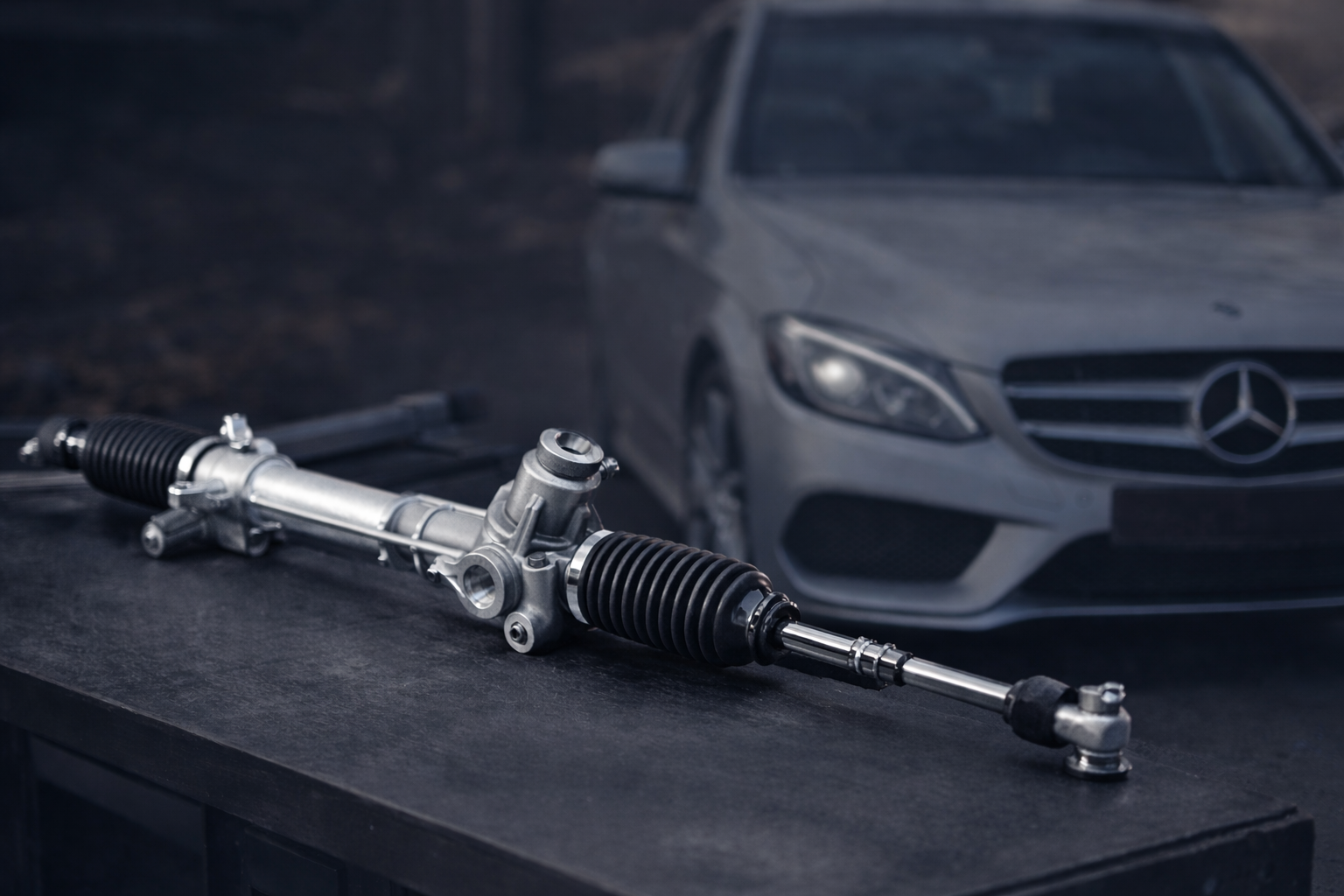
A Practical B2B Guide to Mercedes‑Benz steering rack remanufacturing
In the premium automotive aftermarket, steering systems remain one of the most sensitive and technically demanding components. For Mercedes‑Benz vehicles, steering performance is closely tied to brand identity—smooth response, stability at speed, and consistent driver feedback.
For distributors and professional buyers, sourcing steering racks for Mercedes‑Benz models is rarely a simple purchasing decision. Cost, compatibility, and long‑term reliability all need to be considered together. This guide looks at how Mercedes‑Benz steering systems have evolved and explains why professionally remanufactured steering racks have become a widely accepted solution in global markets.
The Evolution of Mercedes‑Benz Steering Systems
Understanding the generation and architecture of a steering system is essential before making any sourcing decision. Over the years, Mercedes‑Benz has moved through several distinct steering technologies.
Hydraulic Power Steering HPS
Used extensively in earlier generations such as the W203, W211, and W220, hydraulic systems are known for their solid road feel and mechanical simplicity. Over time, however, seals and internal components tend to wear, especially in high‑mileage vehicles.
Electric Power Steering EPS
From models like the W205 C‑Class onward, EPS has become standard. These systems integrate motors, sensors, and control units directly into the steering rack, enabling features such as lane‑keeping assist and automated parking. While efficient and precise, EPS systems are more sensitive to calibration and electronic integrity.
Emerging Steer‑by‑Wire Concepts
Newer platforms are gradually reducing mechanical connections in favor of electronically controlled steering units. These systems place even greater importance on sensor accuracy and software communication, factors that directly affect how remanufacturing must be approached.
New Aftermarket vs Remanufactured OEM Cores
In practice, many buyers are choosing between two alternatives, newly produced aftermarket steering racks or remanufactured units based on original OEM cores.
Remanufactured steering racks built on original Mercedes‑Benz housings offer several practical advantages.
- Material quality
Original OEM housings and rack bars are produced from high‑grade alloys that are difficult to replicate consistently in low‑cost new aftermarket units. - System compatibility
Retaining original electronic components and housings reduces the risk of communication issues with vehicle stability and steering control systems. - Cost balance
Compared with brand‑new OEM parts, professional remanufacturing typically reduces acquisition costs by 40 to 60 percent while still meeting functional expectations for daily and commercial use.
For many distributors, this balance between cost and technical reliability is the main reason remanufactured solutions are increasingly preferred.
Common Steering Rack Issues and Remanufacturing Focus
Effective remanufacturing is not just about replacing worn parts. It requires addressing the known failure points of each system generation.
Hydraulic Steering Systems
Older hydraulic racks often develop internal leakage as seals age, sometimes leading to stiff steering during cold starts. During remanufacturing, these components are disassembled, cleaned, and rebuilt using upgraded sealing materials designed to withstand higher temperatures and longer service intervals.
Electric Power Steering Systems
EPS failures are more often related to sensor drift, water ingress, or motor performance issues. A proper remanufacturing process includes electronic inspection and calibration, ensuring that sensors and control units communicate correctly with the vehicle’s diagnostic systems after installation.
Sourcing Considerations and the Role of Guangzhou
From a supply chain perspective, location plays a practical role. Guangzhou functions as a major automotive parts trading and distribution hub, with access to a wide range of original steering rack cores and well‑developed export logistics.
For international buyers, this means.
- Easier sourcing of model‑specific OEM cores
- Shorter lead times for mixed or multi‑model orders
- Established shipping routes to Europe, South America, Russia, and Southeast Asia
While manufacturing quality ultimately depends on the factory itself, the surrounding supply environment helps support stable and flexible procurement.
About GL‑Laida Focused on Steering Rack Remanufacturing
GL‑Laida is a Guangzhou‑based facility with many years of experience dedicated specifically to remanufacturing hydraulic and electric steering racks. We do not position ourselves as an OEM manufacturer. Instead, our work focuses on restoring original Mercedes‑Benz steering racks to reliable operating condition through structured inspection, rebuilding, and testing processes.
Our day‑to‑day work involves.
- Evaluating and selecting usable OEM steering rack cores
- Replacing wear components and seals
- Performing functional and leakage testing
- Verifying electronic performance on EPS units before shipment
We work primarily with distributors and professional repair networks in markets such as Russia, Brazil, Poland, and Southeast Asia, supplying both left‑hand‑drive and right‑hand‑drive configurations where required.
For buyers looking to explore remanufactured steering rack options for Mercedes‑Benz models, additional product and fitment information is available at
www.gl-laida.com
Summary
Mercedes‑Benz steering systems have evolved from mechanically driven hydraulic designs to highly integrated electronic platforms. Each generation brings different technical requirements, which directly influence how replacement and repair solutions should be evaluated.
Within this context, remanufactured steering racks based on original OEM cores provide a practical option for the aftermarket. When carried out by experienced facilities and supported by proper testing and calibration, remanufacturing can meet functional expectations while maintaining reasonable cost and supply flexibility for global B2B buyers.