
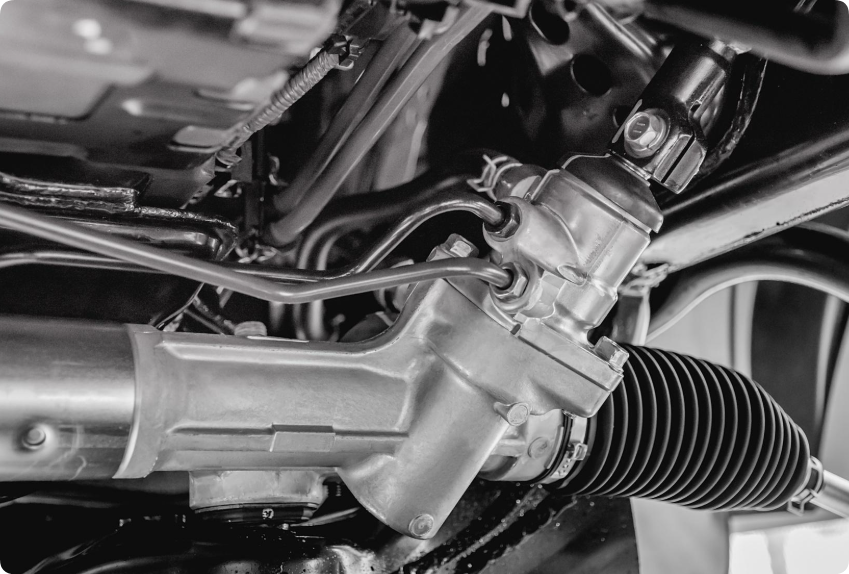
Understanding the specifications and OEM numbers of the steering rack helps distributors, repair plants, and accessories buyers reduce ordering errors and improve the accuracy of vehicle adaptation. Buyers should verify the OEM number, steering system, model year, steering direction, mounting configuration, and related specifications.
What Are Steering Rack Specifications?
Steering rack specifications are the technical details used to identify how a steering rack is designed, installed, and matched to a vehicle.
Although two steering racks may look similar, small differences can make them incompatible. A different connector, mounting point, steering orientation, hydraulic port, or rack housing can prevent correct installation.
The most important steering rack specifications normally include:
- OEM or OE number
- Vehicle make and model
- Production year
- Electric, hydraulic, or manual steering type
- LHD or RHD configuration
- Drivetrain or vehicle version
- Mounting arrangement
- Tie rod configuration
- Electrical connectors or hydraulic ports
- Physical dimensions
These specifications are particularly important in the automotive aftermarket. S&P Global Mobility reported in May 2025 that the average age of U.S. light vehicles had reached 12.8 years, while the number of vehicles in operation increased to approximately 289 million. Older vehicle populations create greater demand for replacement parts and make accurate application matching increasingly important (S&P Global Mobility, May 21, 2025).
What Is an OEM Number on a Steering Rack?
An OEM number is a reference number associated with the steering component originally specified for a particular vehicle application.
It is one of the fastest ways to narrow down a replacement steering rack.
For example, GL-Laida lists 44250-0R030 for an electric power steering rack used on Toyota RAV4 / Wildlander applications from 2019–2021. The same product information also identifies the unit as an electric steering gear for LHD vehicles.
Likewise, steering rack 53601-TR0-A00 is listed for the Honda Civic FB2 from 2012–2015, with an electric power steering system and LHD configuration.
Therefore, an OEM number is useful, but it should not be considered a complete specification by itself.
Why Is an OEM Number Not Always Enough?
Because a steering rack can have multiple application variables even when the basic vehicle information appears identical.
The most common reasons are:
- Part-number supersession: An automobile manufacturer may replace an older OE number with a revised reference.
- Regional differences: Vehicles sold in different markets may use different steering configurations.
- LHD and RHD versions: Steering direction can alter housing, pinion, and mounting geometry.
- Production changes: A steering system may change during the same vehicle generation.
- Equipment variations: Electric assistance, Servotronic systems, drivetrain versions, or other equipment can affect fitment.
GL-Laida’s technical support information also notes that some steering systems have multiple OEM numbers and potentially interchangeable applications. For this reason, OE cross-reference verification is used when identifying replacement steering racks.
Which Steering Rack Specifications Should You Check?
A professional parts match should compare several specifications together.
| Specification | What to Verify | Why It Matters |
|---|---|---|
| OEM Number | Original or cross-reference number | Narrows the correct application |
| Vehicle Model | Exact make, model and chassis | Identifies vehicle family |
| Model Year | Production year or range | Detects design revisions |
| Steering Type | EPS, hydraulic or manual | Determines steering technology |
| Drive Orientation | LHD or RHD | Affects rack geometry |
| Drivetrain | 2WD, AWD or other version | May change application |
| Mounting Points | Brackets and fixing positions | Determines physical installation |
| Connections | EPS plugs or hydraulic ports | Determines system compatibility |
| Tie Rod Layout | Position and configuration | Affects linkage and alignment |
Bosch’s aftermarket catalogue illustrates why these details matter. A hydraulic rack-and-pinion steering gear can be specified not only as hydraulic, but also for Servotronic steering, left-hand-drive vehicles, and a particular track-rod configuration (Bosch AutoParts Catalogue, accessed August 2026).
This is why professional buyers should compare the complete specification rather than searching only by car name.
How Do Steering Rack Parts Affect Specification Matching?
The internal and external construction of the steering rack provides another useful verification layer.
The rack shaft, pinion assembly, tie rods, bushings, seals, housing, boots, and power-assist components must correspond to the intended steering system.
For example, the configuration of the pinion area may affect steering-column connection, while tie rod position and housing dimensions affect chassis fitment. EPS racks add electric motors, sensors, control electronics, and connectors. Hydraulic racks instead depend on hydraulic passages, seals, valves, and fluid connections.
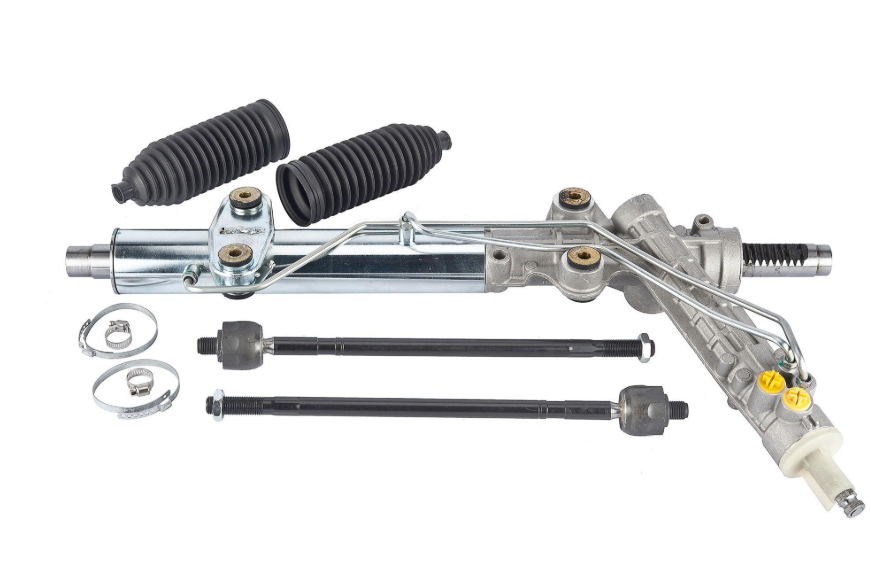
For a detailed explanation of these components and their roles, see GL-Laida’s guide to steering rack parts. It explains the functions of the rack shaft, pinion gear, tie rods, seals, bushings, bearings, and bellows boots and shows why component-level differences matter when evaluating a steering rack.
Consequently, photographs of the original unit can be valuable when an OEM number alone does not provide a definitive match.
How Do You Match the Correct Steering Rack?
The correct approach is to cross-check multiple identifiers.
Check the OEM Number
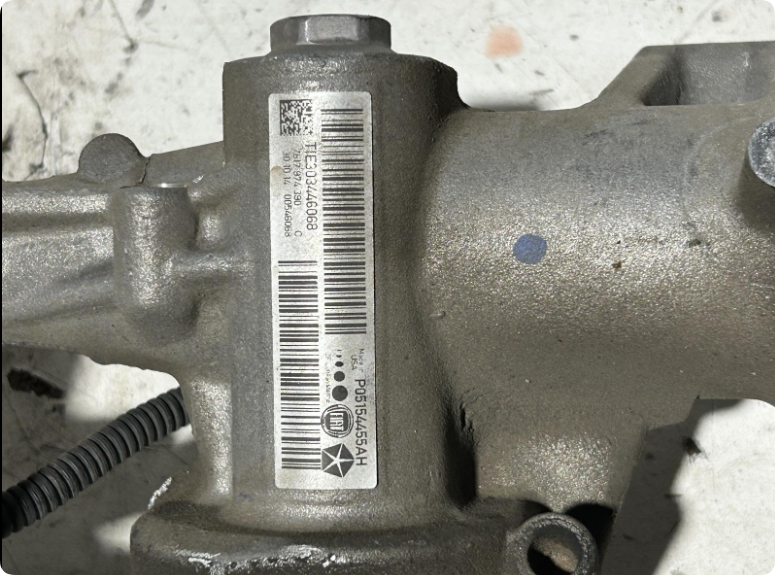
First, locate the OE number on the original steering rack, vehicle parts catalogue, label, or existing service record.
Do not rely on a partial number when a complete reference is available.
Confirm Vehicle Information
Record:
- Vehicle manufacturer
- Exact model
- Production year
- Chassis or generation
- Engine or drivetrain where relevant
These details help distinguish visually similar steering racks.
Verify LHD or RHD
Always confirm whether the vehicle is left-hand drive or right-hand drive.
Steering direction is a fundamental specification rather than a minor variation. Bosch, for example, explicitly separates steering products according to LHD/RHD application in its aftermarket product specifications.
Use the VIN When Necessary
A VIN provides another method for confirming vehicle identity.
The U.S. National Highway Traffic Safety Administration states that vehicles covered by its VIN regulations use a 17-character Vehicle Identification Number containing information about the specific vehicle (NHTSA VIN Decoder, accessed August 2026).
When the application remains uncertain, VIN information can be combined with the OEM number and photographs of the original steering rack.
What Is Different About EPS Steering Rack Specifications?
Electric power steering racks require closer attention to electronic compatibility.
Important points include:
- Motor configuration
- Electrical plugs and connectors
- Sensor arrangement
- Control-module compatibility
- Steering direction
- OEM reference
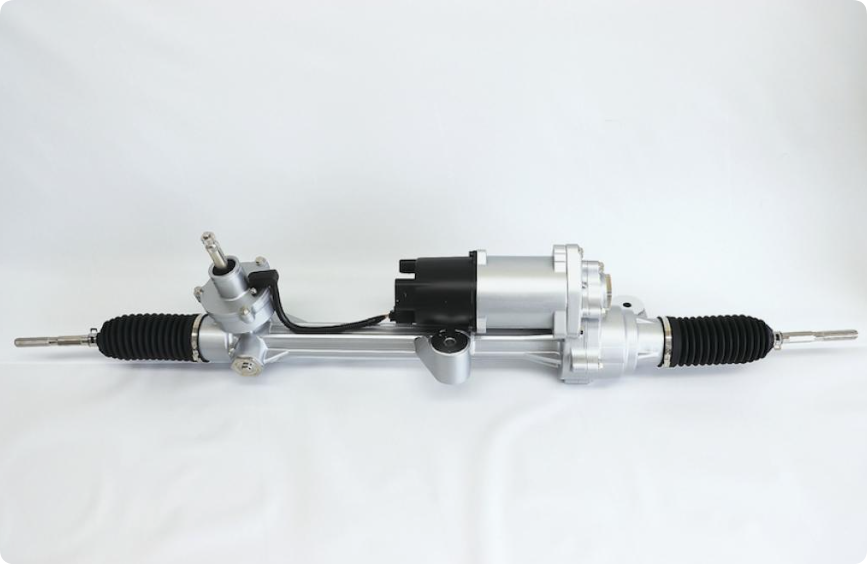
Some EPS systems may also require manufacturer-specified calibration or initialization after installation.
Therefore, two electric steering racks with similar housings should never be considered interchangeable solely because they physically resemble one another.
What Should Buyers Check on Hydraulic Steering Racks?
Hydraulic steering rack identification focuses more heavily on mechanical and hydraulic configuration.
Check:
- Hydraulic inlet and return ports
- Housing dimensions
- Mounting positions
- Pinion configuration
- Tie rod arrangement
- LHD or RHD
- OEM number
In addition, inspect the condition of seals, boots, rack surfaces, and hydraulic connections. These parts directly affect pressure retention and service performance.
As Todd Campau of S&P Global Mobility observed when discussing the aging vehicle fleet, vehicles continue to demonstrate substantial resilience despite economic pressure. For the aftermarket, that means older vehicles remain in service longer and dependable replacement-part identification becomes increasingly relevant (S&P Global Mobility, May 2025).
How Should Distributors Verify Steering Racks Before Bulk Ordering?
Distributors should establish a repeatable verification process before placing volume orders.
A practical request should include:
- OEM number
- Vehicle make and model
- Production year
- VIN or chassis information where available
- LHD/RHD configuration
- Steering type
- Quantity required
- Clear photographs of the original rack
GL-Laida’s technical support process uses OEM numbers, vehicle model and year, VIN information, and product photographs to assist with product identification. The company also provides OE cross-reference support when several numbers are associated with one steering application.
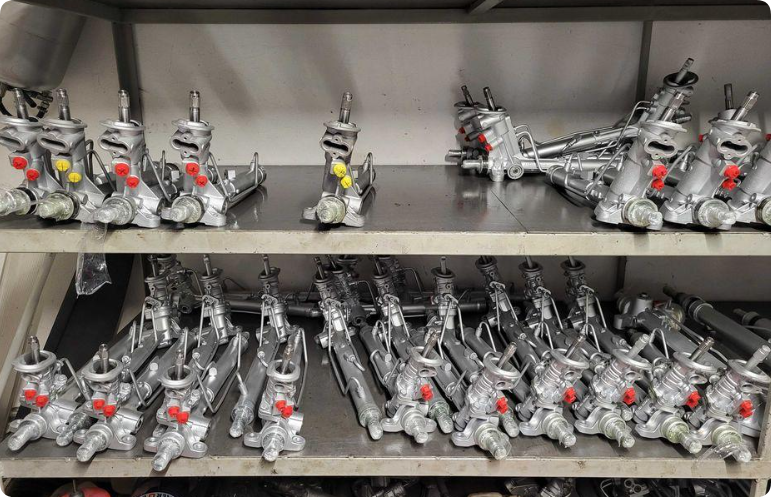
This type of verification reduces the risk of ordering a rack that looks correct but differs in a critical specification.
Conclusion
The best steering rack is not simply the unit that matches the vehicle name. It is the unit that matches the OEM number, vehicle application, production year, steering type, LHD/RHD configuration, connections, and physical design.
Start with the OEM reference, then verify the remaining steering rack specifications. When identification is uncertain, use the VIN, chassis information, and photographs of the original assembly.
For professional aftermarket purchasing, multi-point verification is the most reliable choice.
Frequently Asked Questions
Where Can I Find the OEM Number on a Steering Rack?
The OEM number may appear on a label, barcode sticker, engraved surface, stamped area, or manufacturer identification plate on the steering rack. It can also be obtained from an OE parts catalogue.
Can I Buy a Steering Rack Using Only the OEM Number?
Not always. The OEM number should also be checked against the model year, chassis, LHD/RHD configuration, steering type, and other vehicle specifications.
Can Two OEM Numbers Fit the Same Steering Rack?
Yes. Some OE numbers are superseded or cross-reference to another compatible number. Compatibility should be verified through reliable parts data rather than assumed.
Are LHD and RHD Steering Racks the Same?
No. In most applications, LHD and RHD steering racks have different configurations. The steering direction should always be confirmed before ordering.
What Information Should I Send a Steering Rack Supplier?
Provide the OEM number, vehicle make, model, year, VIN or chassis information, LHD/RHD configuration, steering type, required quantity, and clear product photographs when possible.