
The steering system is the core of any vehicle’s safety and handling. For global auto parts distributors, wholesalers, and repair chains, understanding the technical nomenclature of these parts is a prerequisite for accurate sourcing and minimizing warranty claims.
This glossary provides a definitive examination of essential steering components, focusing on the mechanical synergy required for modern vehicles, and explains why sourcing a high-quality remanufactured steering rack is often the most cost-effective and reliable choice for the aftermarket.
The Fundamental Framework of Steering Connectivity
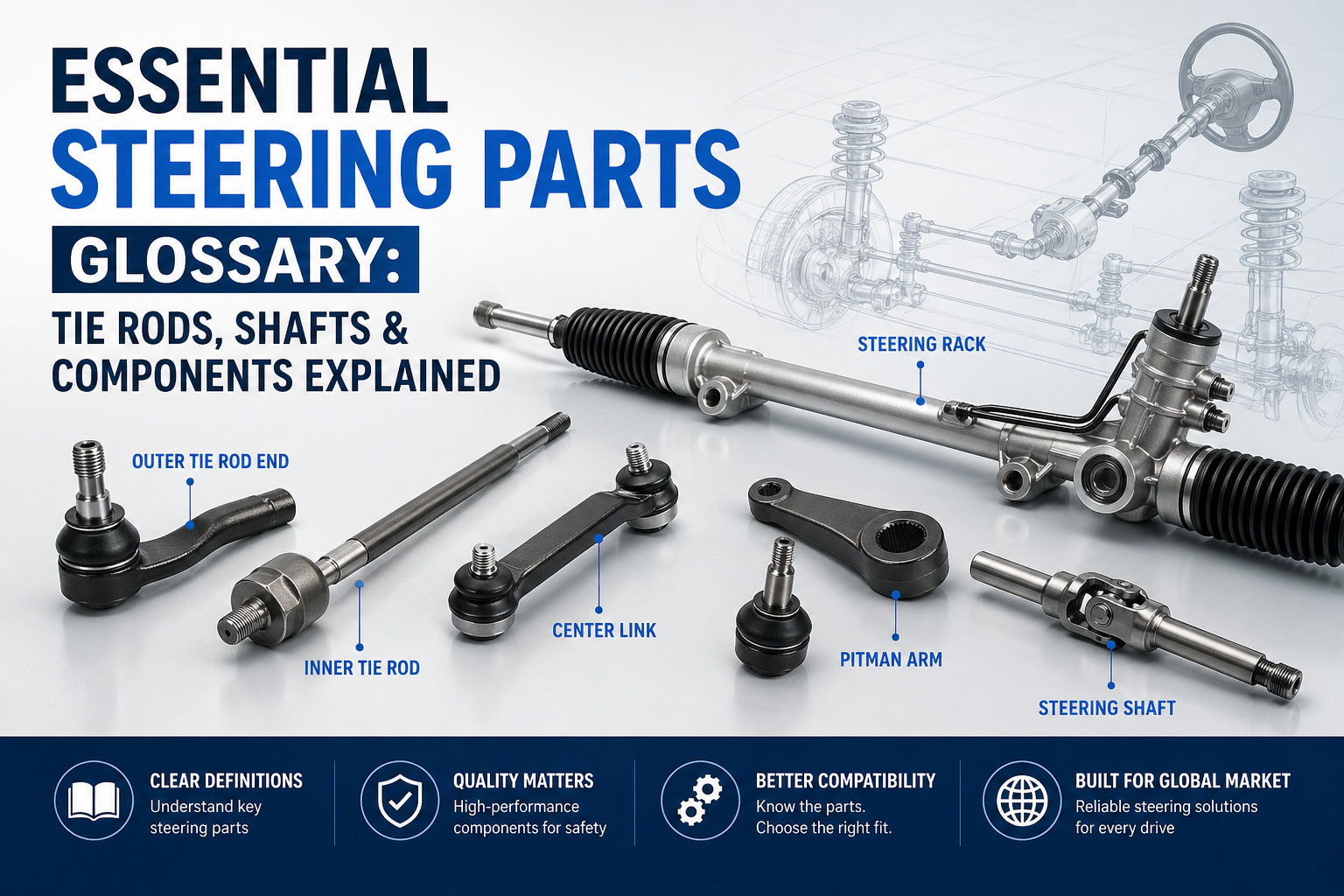
A vehicle’s steering architecture is a closed-loop system designed to manage torque transmission while absorbing road vibrations. At the core of this system is the steering rack (also widely known as the steering gear), which acts as the primary transducer between the steering column and the wheel hubs.
Whether utilizing a traditional hydraulic assist or a modern electric power steering (EPS) configuration, the following components remain the critical links:
- Steering Shaft: This rigid component connects the steering wheel to the steering gear, transmitting rotational torque through universal joints.
- Tie Rod Ends: These ball-and-socket joints connect the steering rack to the wheel knuckles, allowing for smooth angular movement during turns.
- Steering Rack Housing: The protective outer shell that encases the internal rack and pinion gears, providing the structural base for the entire assembly.
- Dust Boots (Bellows): These accordion-like rubber covers protect the inner tie rods and the rack’s internal seals from road debris, moisture, and salt. Maintaining boot integrity is the primary defense against premature failure.
Detailed Glossary: The Core of the Steering Gear
Understanding the specific function of the central assembly is vital for diagnosing steering irregularities. Each component must meet rigorous dimensional tolerances to prevent mechanical play or “dead zones” in the steering feel.
The Rack and Pinion Assembly
The rack and pinion is the most common steering gear design in modern passenger vehicles.
- Function: The pinion gear, attached to the steering shaft, rotates and moves the linear rack side-to-side to turn the wheels.
- Evolution: This assembly has evolved from manual to hydraulic (using fluid pressure), and now to EPS (using an electric motor and sensors).
As automakers phase out hydraulic systems to save weight and improve fuel efficiency, Electric Power Steering (EPS) has become the industry standard. High-quality aftermarket suppliers now focus on providing EPS solutions that match OEM performance without the exorbitant price tag.
Professional Standards in Component Remanufacturing
Because of this technical complexity, when a steering unit fails, the replacement must meet exacting standards. Buying a brand-new OEM replacement is extremely expensive, while used salvage parts carry high risks. This is why the global demand for premium remanufactured steering racks is skyrocketing.
How is component integrity ensured during the remanufacturing process? As a leading remanufactured steering gear factory, GL-Laida utilizes a rigorous, multi-stage validation process to restore cores from major vehicle brands (from Toyota and Honda to Mercedes-Benz and Tesla) to peak performance:
- Disassembly and Precision Cleaning: Components are stripped to the core. Ultrasonic cleaning removes all contaminants that could interfere with the performance of seals or sensors.
- 100% Replacement of Wear Parts: All seals, O-rings, Teflon bushings, and dust boots are replaced with high-grade new materials to prevent future leakage.
- Electronic Calibration: For EPS units, the electronic control units (ECUs) and torque sensors are reset, calibrated, and checked to ensure seamless communication with the vehicle’s onboard computer.
- Simulated Road Testing: Every unit undergoes a final performance check on dedicated testing benches to simulate real-world driving conditions, ensuring consistent torque assist and zero noise.
Why Partner with a Direct Factory?
For international wholesalers and repair chains, the optimal sourcing strategy is to bypass middlemen and work directly with a specialized remanufactured steering gear factory.
By focusing on specialized remanufacturing, GL-Laida provides a comprehensive inventory of Left-Hand Drive (LHD) and Right-Hand Drive (RHD) steering gear assemblies across a wide array of vehicle brands. We provide the technical support, stringent quality control, and robust warranties required to sustain global automotive fleets profitably.
Optimize Your Inventory with GL-Laida’s Precision Engineering
Understanding the intricate mechanics of steering systems—from the resilience of dust boots to the calibration of EPS units—is the first step toward providing superior automotive service. The next step is choosing a partner who masters these details at scale.
At GL-Laida, we bridge the gap between technical expertise and global supply chain demands. By choosing our factory-direct remanufactured steering solutions, you are not just purchasing parts; you are investing in:
- Reliability: Every unit is restored to OEM specifications through our rigorous multi-stage validation.
- Versatility: Access a vast inventory of LHD and RHD components covering everything from luxury European brands to high-volume Asian models.
- Competitiveness: Gain a significant edge in the aftermarket with high-performance steering gears that offer the best cost-to-quality ratio in the industry.
Ready to strengthen your product lineup?
Don’t let supply chain inconsistencies hold your business back. Partner with a specialized manufacturer that understands the precision of steering as well as you do.
Contact GL-Laida Today to request our latest product catalog or discuss a customized supply solution for your market.